
Understand the need
Separate the customer’s priorities and pain points from the rep’s assumptions.
Turn recorded meetings into a clear summary of customer needs, buying intent, qualification gaps and next steps—with evidence you can return to.
Separate the customer’s priorities and pain points from the rep’s assumptions.
Review intent, decision participants, budget and timing without treating unknowns as confirmed.
Return to conversation moments behind a finding and check the agreed next action.
A transcript tells you what was said. A useful meeting review helps you decide what to do about it. SalesLens brings the customer story, sales execution and follow-up into a structured review, so a rep and manager can work from the same evidence.
Explore practical use casesReview the problem, its impact and the outcome the customer wants. Separate a specific customer statement from an assumption that still needs checking.
Look for unanswered questions about stakeholders, budget, decision criteria and timing. Use the gaps to prepare a purposeful next meeting.
Consider positive signals alongside hesitation, risk and unresolved objections. A promising comment needs context before it becomes a forecast assumption.
Review commitments and the people responsible. Check the original conversation when a deadline, owner or next step needs clarification.
Real demo-account screens. Explore the detail behind the workflow.
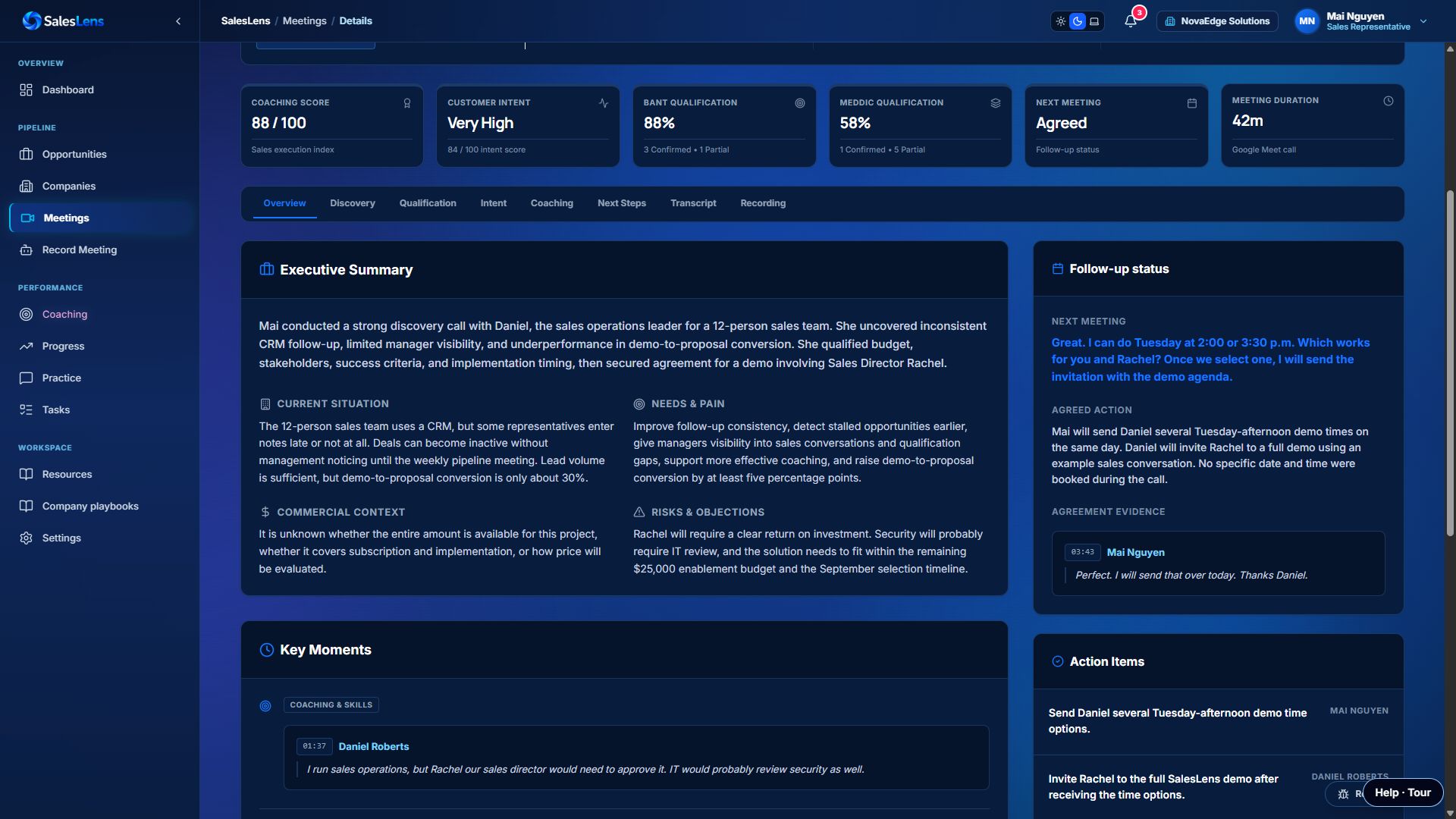
A target date is useful, but the approval process and implementation owner are still unclear.
Illustrative situations showing how to put the feature to work.
The prospect likes the solution, but the rep has not established who approves the investment.
Review the qualification evidence and use the missing decision-process question to shape the follow-up.
Build the proposal around a clearer buying process instead of enthusiasm alone.
The pipeline update says “good meeting”, without explaining what changed.
Read the summary, check caution signals and review agreed actions before discussing the opportunity.
Spend review time resolving a specific gap and agreeing who will address it.
Use these outcomes to guide your team’s review and assess whether the workflow is helping.
Review whether the next interaction answers previously missed questions.
Use evidence completeness and clarity of next actions as review criteria.
Give the next account owner a documented starting point, with source context.
Start with a supported recording, the right meeting type and a confirmed customer link. Review the first analyses with the rep so interpretation, missing information and follow-up ownership are clear.
Yes. The meeting view organises the summary, discovery, qualification, intent, coaching and next steps. The source conversation remains important for checking the interpretation.
Yes. Review buying-stage context, positive and caution signals alongside supporting evidence. Intent is an assessment, not a promise that a deal will close.
Bring recurring needs, concerns and competitor mentions from sales conversations into a useful view for the wider business.
Explore featureBring meetings, relevant customer emails, contacts and opportunities into one customer context so the next conversation builds on the last.
Explore featureUse real customer objections to improve questions, responses and practice. Start with the evidence in meeting analysis, then coach the moment that needs work.
Explore feature