
Read the concern in context
Separate a question, a hesitation and a clear objection before deciding how to respond.
Use real customer objections to improve questions, responses and practice. Start with the evidence in meeting analysis, then coach the moment that needs work.
Separate a question, a hesitation and a clear objection before deciding how to respond.
Look at what the rep said and what the customer did next.
Use the objection as a realistic coaching and role-play scenario.
Price, timing and “we already have a supplier” can mean very different things. Reviewing objections in context helps the team understand the concern, assess the response and practise a more useful next question.
Explore practical use casesStart from the concern expressed in the meeting and the context around it, rather than assigning a stock rebuttal.
Review whether the rep acknowledged, clarified and explored the concern before answering.
Look for the question or decision that still needs clarification after the response.
Use the real concern as a coaching and role-play scenario, with an approach grounded in your playbook.
Real demo-account screens. Explore the detail behind the workflow.
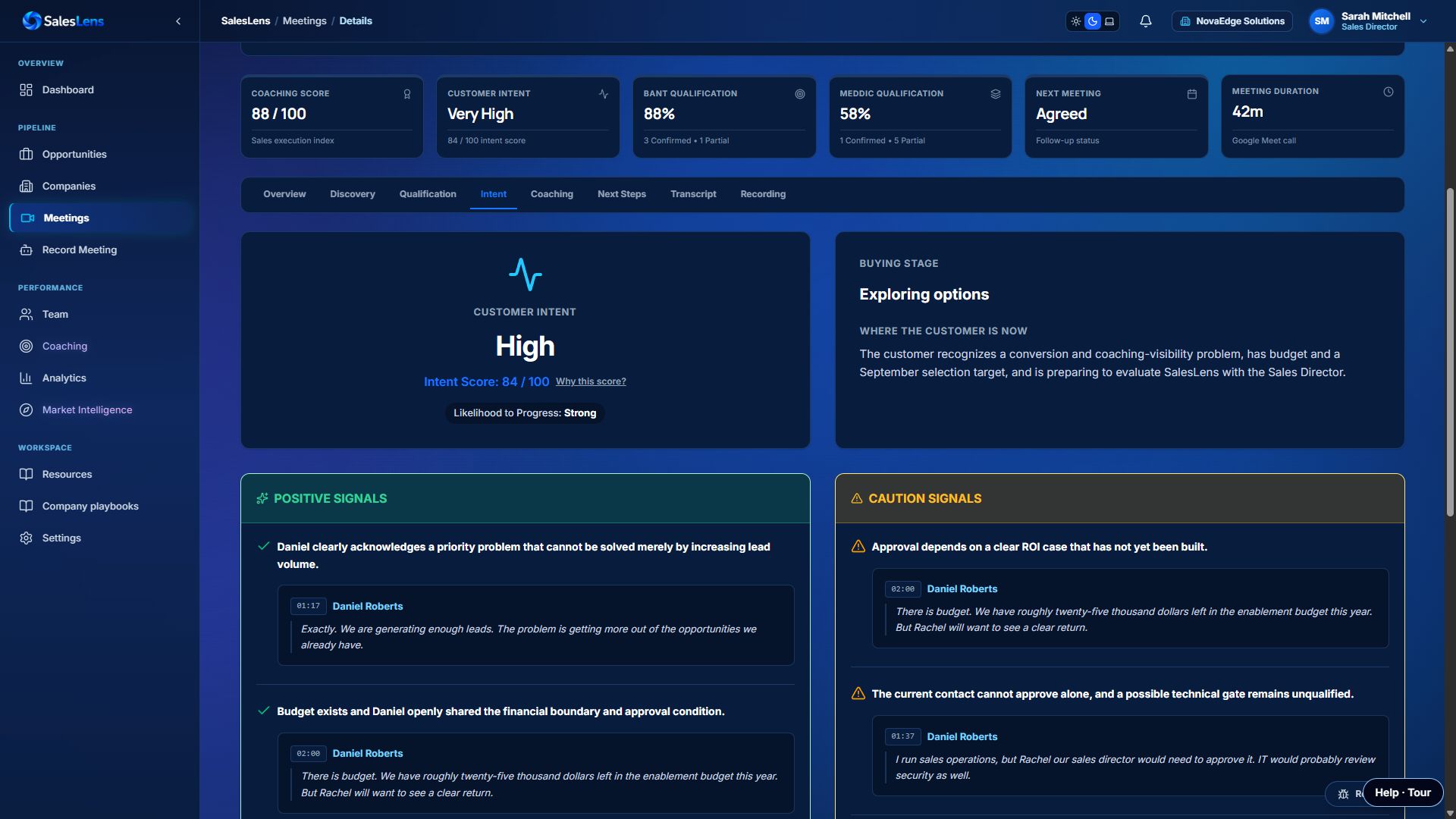
That may mean satisfaction, switching effort or simply no reason to explore further.
Illustrative situations showing how to put the feature to work.
The rep assumes the objection calls for an immediate discount.
Review whether the customer meant affordability, unclear value, a competitor comparison or an approval constraint.
Prepare a response to the actual concern before changing the commercial offer.
The conversation stops because the rep has no useful follow-up question.
Practise acknowledging what works and exploring whether any current process creates friction.
Create a respectful discovery conversation without forcing a problem the customer has not expressed.
Use these outcomes to guide your team’s review and assess whether the workflow is helping.
Review clarification before judging the strength of a rebuttal.
Base role-play on concerns heard in actual customer meetings.
Understand why a customer hesitates before choosing a concession.
Start in meeting analysis with the customer concern and its evidence, then use coaching and practice to improve the response. A standalone grouped objection library and manager-approved response workflow remain separate roadmap capabilities.
Review customer concerns and supporting evidence in meeting analysis and use coaching and practice to work on the response.
The standalone Objection Library, grouped objections and manager-approved response workflow are on the roadmap. The current page demonstrates the meeting-analysis and practice workflow.
Turn recorded meetings into a clear summary of customer needs, buying intent, qualification gaps and next steps—with evidence you can return to.
Explore featureBring recurring needs, concerns and competitor mentions from sales conversations into a useful view for the wider business.
Explore featureBring meetings, relevant customer emails, contacts and opportunities into one customer context so the next conversation builds on the last.
Explore feature